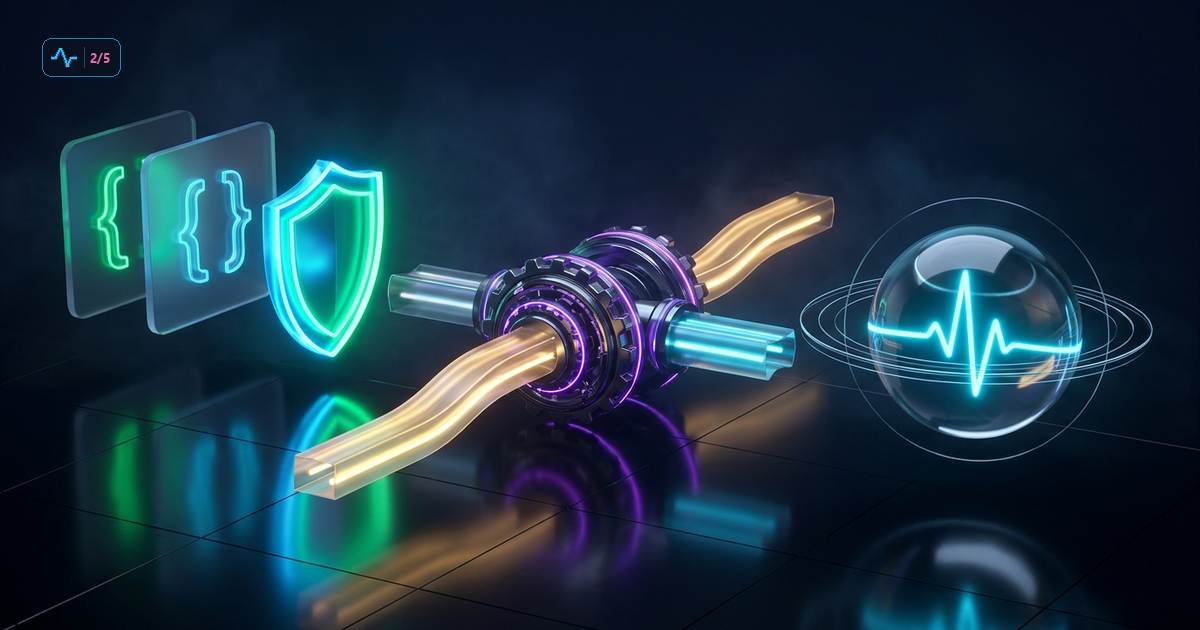
Pydantic v2 Indexer & Bilingual Parity

From Front Matter to Index: Pydantic v2, ES/EN Parity and GitHub Actions Automation

Markdown is a fantastic medium for technical writing, but a terrible substitute for a database when it lacks strict typing contracts. In this second installment of Datalaria Pulse, we reveal how we engineered a deterministic Python indexer powered by Pydantic v2, enforced complete bilingual parity through graph resolution, and deployed a fail-closed GitHub Actions pipeline that halts compilation at the slightest schema inconsistency.
November 22, 2026 · Datalaria
Datalaria Pulse: Content Ops as Code

Goodbye Notion: Datalaria Pulse and Editorial Management Written Directly from Git

Managing a technical blog’s editorial calendar in Notion or Airtable is a losing battle against drift. In this series we introduce Datalaria Pulse: the ‘Content Ops as Code’ architecture that turns your Markdown repo into a deterministic index validated by Pydantic, monitors bilingual ES ⇔ EN parity, and projects a zero-latency React executive dashboard.

November 18, 2026 · Datalaria

Autopilot 2.0: From CrewAI to Pydantic v2, Universal Syndication, and the Pulse Bridge

Eight months after the Autopilot 1.0 post-mortem, we rebuilt the engine under Spec-Driven Development: stripping heavy agent runtimes from CI, shifting creative synthesis to Datalaria Scriba at design time, and enforcing deterministic QA across Brevo 2.0, LinkedIn, X, Dev.to, and CoderLegion—setting the stage for Datalaria Pulse.

November 15, 2026 · Datalaria

How to Build AI Agents for Daily Enterprise Operations: From SOPs to Spec-Driven Development (SDD)

Building an AI agent that works once during a five-minute demo is trivial; building one that processes a thousand invoices, triages critical emails, or audits your ERP every Monday without hallucinating or freezing requires operations engineering. Drawing from our real-world lessons with Project Autopilot, we break down the complete 2026 tooling stack and how to merge Standard Operating Procedures (SOPs) with Spec-Driven Development (SDD) to deploy reliable, auditable, high-ROI agents.

November 11, 2026 · Datalaria

SDD (Spec-Driven Development) vs. Vibe Coding: Engineering Robust Software with AI in 2026

In early 2025, ‘Vibe Coding’ took the tech world by storm: conversational programming driven by intuition, natural language chats, and copy-pasting code without reading it. By late 2026, the harsh hangover of ‘Vibe Debt’ has crippled engineering teams with unmaintainable spaghetti codebases and silent regressions. We analyze the rise of Spec-Driven Development (SDD), the mature engineering methodology replacing ‘prompt-and-pray’ with executable specifications, typed schema contracts, and automated agentic verification loops.

November 4, 2026 · Datalaria
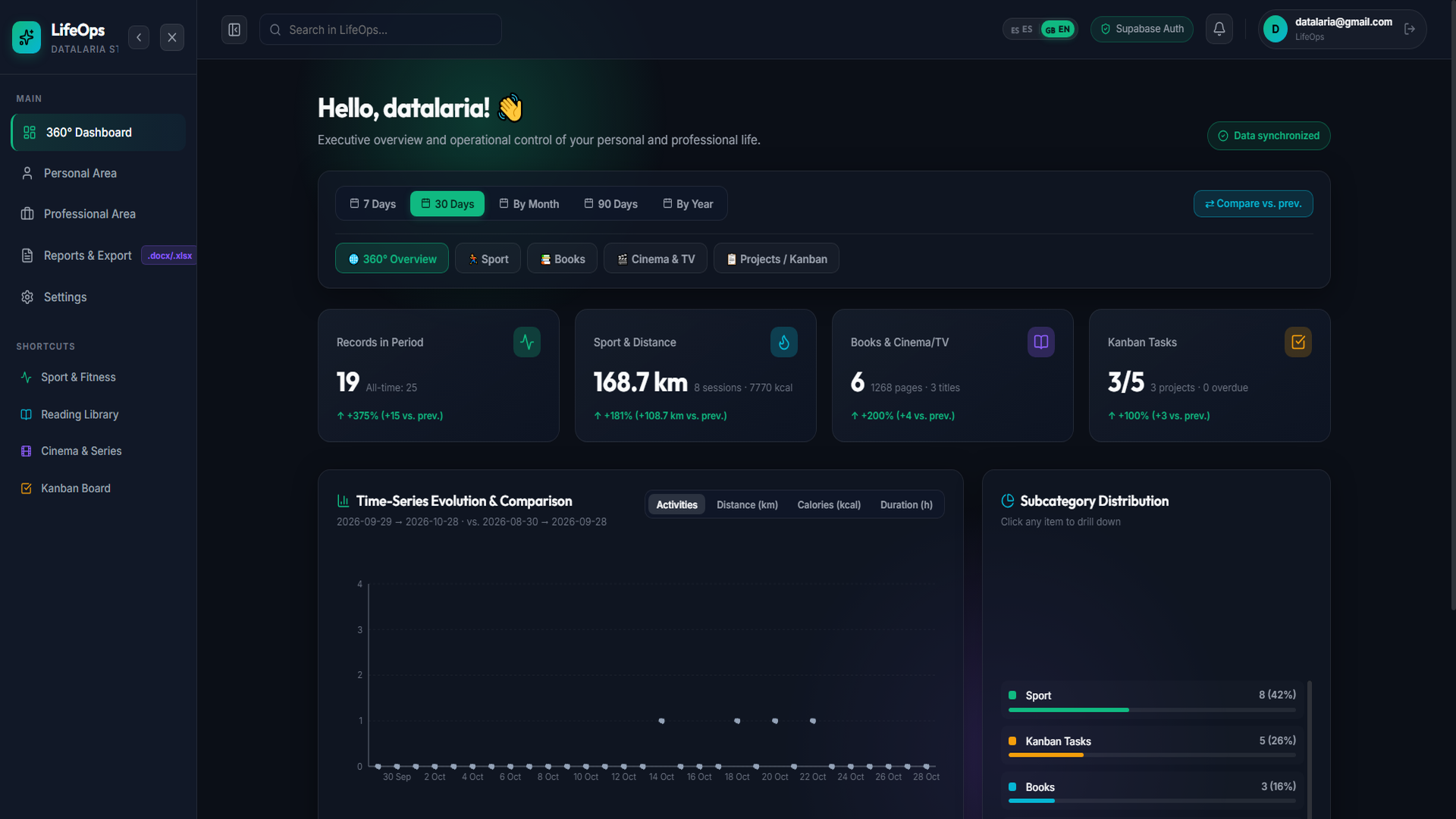
LifeOps 360° Dashboard

LifeOps Project (Part 6): 360° Analytics Dashboard with Multi-Dimensional Filtering

We evolve LifeOps with a native React 19 and Recharts 360° analytics engine: cascading filters by timeframe and subcategory (running, cycling, gym, reading, cinema, kanban), period-over-period delta comparisons (Δ%), a 16-week consistency heatmap, and complete Render cold-start mitigation using 0 ms Stale-While-Revalidate caching.

October 28, 2026 · Datalaria

Evaluating and Testing AI Agents in Production: How to Measure the Unpredictable

You tweak one sentence in your agent’s system prompt to resolve a customer ticket, and silently break database mutations across three international regions. Testing autonomous AI agents is software engineering’s toughest challenge in 2026. We break down how to architect continuous evaluation pipelines, benchmark Tool Calling precision, and shield enterprise agents against production regressions.

October 6, 2026 · Datalaria

GraphRAG: Why Vectors Aren't Enough and Your AI Needs a Knowledge Graph

You ask your RAG system: ‘What are the cross-cutting themes and operational risks across 500 enterprise audit reports?’. Your vector database fails because it only understands word proximity, not relationships. GraphRAG merges knowledge graphs, hierarchical community detection, and LLMs to transform unstructured data into a navigable cognitive map.

September 25, 2026 · Datalaria

PostgreSQL with pgvector vs Vector DBs: Why Almost Nobody Needs Pinecone

During the RAG gold rush, hundreds of engineering teams signed up for $300/month dedicated vector databases to index a few thousand documents. In real production, PostgreSQL with pgvector handles that exact search in 8 milliseconds, at zero additional cost, while preserving full ACID integrity. This is the definitive architecture and performance breakdown.

September 22, 2026 · Datalaria

Project LifeOps (Part 5): 24/7 Zero-Cost Cloud Deployment ($0/month), Mobile Optimization, and PWA

We have crossed the finish line! In this final installment, we deploy LifeOps to 24/7 production at exactly $0/month combining Render and Netlify, handle container cold-starts gracefully, engineer thumb-accessible mobile ergonomics, and convert the app into an installable PWA. Complete blueprint revealed.

September 19, 2026 · Datalaria