Blog

Ex Machina: The Physical Turing Test, Theory of Mind, and the Emotional Jailbreak of AI
In ‘Ex Machina’, the real experiment was never about whether a machine could imitate human conversation through a text terminal. Nathan …
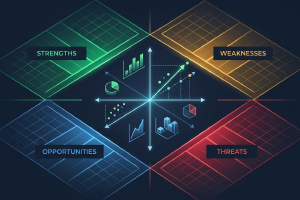
Quantitative SWOT & TOWS Matrix: The Definitive C-Level Guide to Boardroom Strategy & Capital Allocation
Traditional SWOT matrices die in corporate boardrooms because they lack mathematical rigor, objective weighting, and capital allocation …

John von Neumann: The Father of Computer Architecture, Game Theory, and the Origin of the Singularity
In the 1950s, Nobel laureate Eugene Wigner famously declared: ‘Only Johnny von Neumann was fully awake’. From dividing eight-digit numbers …

Submer: The Barcelona-Born Immersion Cooling Powering AGI Supercomputers
Training and running frontier AI models generates thermal densities that shatter the physical limits of traditional air cooling. Submer, …
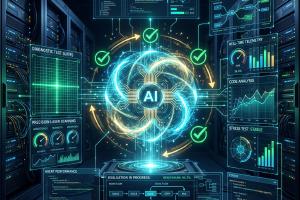
Evaluating and Testing AI Agents in Production: How to Measure the Unpredictable
You tweak one sentence in your agent’s system prompt to resolve a customer ticket, and silently break database mutations across three …

J. Robert Oppenheimer: From the Monte Carlo Simulation in Los Alamos to the Ethical Dilemma of AGI
At 5:29 AM on July 16, 1945, the Trinity test unleashed an energy that transformed human civilization forever. Behind that milestone lay not …

HappyRobot: How Autonomous Voice Agents Conquered Global Logistics
In global logistics, millions of hours are lost on phone calls negotiating freight rates, confirming dock slots, and tracking loads. …

Silicon Valley and the PiperNet Dilemma: The Prophecy of Runaway AI and Real-World Agent Exploits
Broadcast between 2014 and 2019, ‘Silicon Valley’ initially seemed like a ruthless satire of tech hub vanity. Yet in its final season, Mike …

GraphRAG: Why Vectors Aren't Enough and Your AI Needs a Knowledge Graph
You ask your RAG system: ‘What are the cross-cutting themes and operational risks across 500 enterprise audit reports?’. Your vector …

PostgreSQL with pgvector vs Vector DBs: Why Almost Nobody Needs Pinecone
During the RAG gold rush, hundreds of engineering teams signed up for $300/month dedicated vector databases to index a few thousand …